Showing posts with label illustration and art. Show all posts

Plenty of Fish

Thursday, October 24, 2013 | |


INT. CAFETERIA - DAY

Jake enters the cafeteria. Ryan, his friend, is sitting alone. His notes, laptop, and lunch are simultaneously sprawled across the table. Ryan is typing away.

Jake: (spotting Ryan) Hey.

Ryan: Dude! What the hell, man. Why weren't you at class?

Jake: Um, I just woke up.

Ryan: (glances his watch) It's one. PM. Wednesday.

Jake: Uh, yea. Sorry.

Ryan: Whatevs. (discontent) If you hurry they might still have a sub or a slice right now. Unless you want the soup. Nobody wants that shit though.

Jake: I'm good.

Ryan: You probably need the notes, right? Hold on. I gotta finish this.

Jake: Actually (cuts himself off).

Ryan resumes typing. Jake sits himself, pulls out his water and takes a sip. A minute or two passes. Ryan stops, lowers his laptop screen, grabs his half-eaten lunch and begins munching.

Ryan: Long night?

Jake: She broke up with me.

Ryan: (stops chewing) When?

Jake: Last night.

Ryan: I'm sorry, man.

Jake: Yea.

Ryan: You okay?

Jake: Uh huh, I think so.

Ryan: Why did she break up with you?

Jake: I don't know.

Ryan: She didn't say?

Jake: Well, she said I was the right guy but at the wrong time.

Ryan: What the fuck does that mean?

Jake: I don't know.

Ryan: (chewing again) That's messed up.

Jake: Yea, maybe.

A moment admits.

Ryan: Cheer up dude, there's plenty of fish in the sea.

Jake: Uh, what? No. I don't want another fish.

Ryan: It's a big sea. You never know.

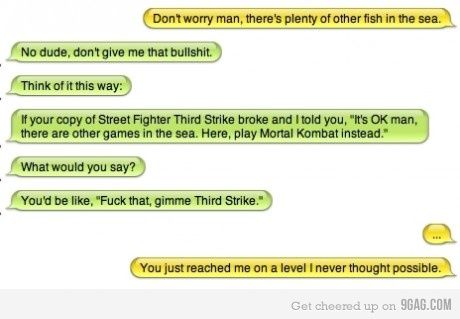
Jake: No, don't give me that bullshit. That's not how it works, and you know it. If your copy of 'Halo' broke and I told you, "It's OK, there are other games in the sea. Here, play 'COD' instead." What would you say? You'd be like, "Fuck that, give me my 'Halo'." There is no other fish.

Ryan is speechless.

Ryan: (murmurs) Wow.

Jake: That's what I thought.

Ryan: That is some next-level, I don't even know what to call it.

Jake: (sighes; pausing) Yea. I wouldn't mind playing 'Mass Effect' though. I read some good reviews.

Ryan: Wait, is the analogy still on? Because, you know, who's 'Mass Effect'?

Jake: Shut up. You know what I mean.

Note: This post was inspired by a 9gag entry I saw a while back.

Thought Ink

Friday, May 31, 2013 | |

What to write. What to write? I could post those black and white photographs I've taken from Toronto and New York a while back. No, no. That's too easy. Picture is worth thousand words. One click. Thousand words. It's too easy. Curious though, I bet that phrase came along the same time the film photography was first invented. It took hours and even days to develop a single slide. So, with the selection process and timely consuming efforts needed, that phrase might have adequately matched the weight of thousand words and a single photo. But maybe not these days. Pictures are more costly in information, too. Photo comes in units of megabytes. Thousand words? Tens of bytes at most. Anyways, I'm getting side-tracked.

What to write?

Fashion? Spring is at the peak, and summer's nearing. It'd be perfect. I shall call it "A Study in Cotton". I mean, nearly everything is made of cotton in summer. Perhaps, save for sporting gears. But that's utility, not fashion. Or is it? Hmm. How about "Muse"? And just post pictures that I liked from fashion blogs. Something colourful and whimsical. But then again, I never do whimsical. That doesn't really grab my attention for long. I might even start disliking it after few hours. Anything from my previously abandoned posts? Shuffle, shuffle, shuffle. Well, what about that depressive note you wrote months back but never posted because - wait, I can't remember why I didn't post this. I mean, it's not terrible. It's not frighteningly dark. Oh, right! It's too abstract. That was the reason. "The mountains were high. It was a starless night. Wonders unseen and gone." What does that mean? Even I'm not too sure. Ok, next? How about "The Curious Interpretations of Reality?" I think that was the post reviewing and listing my top favorite documentary films. Hold on. Ah, crap. I still have to watch "The Cove". Those poor dolphins and evil Japanese fishermen. Okay, never mind. Anything else?

Argh! What to write!?

It's like there's a massive roadblock in my head. Well, better smash it with my thought train. Hopefully, there's nobody onboard. Wait, who's driving the train, then? Is it me? Am I going to survive? Well, you have so far, haven't you? That's true. I will be fine, I think. Technically, I don't think it's possible to project yourself into someone, or something, in your thoughts. People do engage in meta-thinking. Yes, they do! But, the subject and the object of thoughts are always ourselves. It'd be nuts if you were assessing your thoughts on someone else's thoughts in your own head! What if you could dream that? Haha. Even "Inception" wasn't that crazy. It'd definitely be a cool dream though. Okay, stop. Just let it come to you. Breathe. Silence.

Silence. You're doing it well.

Silence. Donut! Ah, damn it! Am I hungry? I think I am. I'm salivating. Or, is that just milk? No, it's much more viscous. Yea, definitely salivating. It's the donuts I bought this afternoon. Well, there're still several left and they're sitting on the kitchen table right now. So, just finish this post and go eat! There's my motivator. But, do you think people will think I'm nuts when they read this? Well, you could certainly come off a little odd. And weird. But, who cares? Clickity-click. Posted! Done!

Donuts > People.

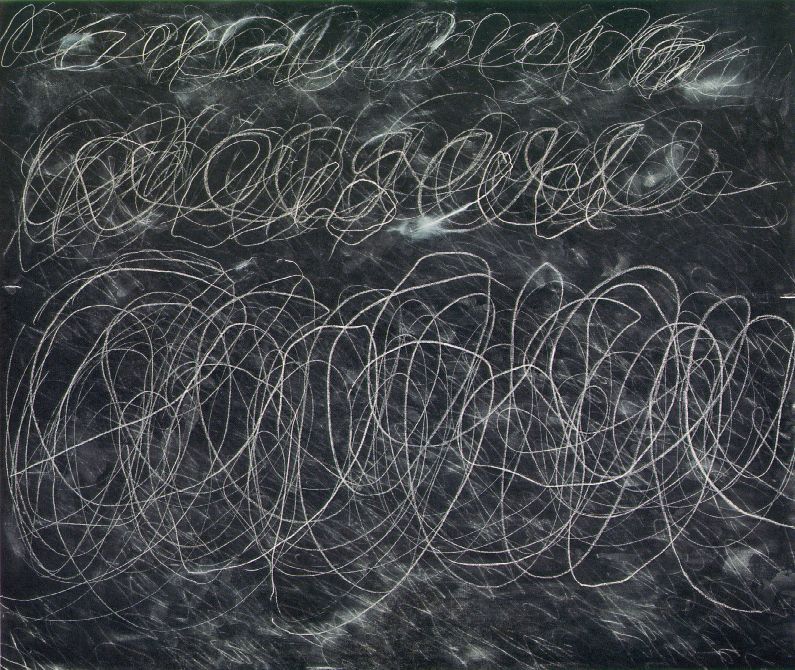
"Untitled" by Cy Twombly (1970)

I Love You (Son)

Sunday, March 31, 2013 | |


INT. HALLWAY OUTSIDE NATHAN'S ROOM -- THANKSGIVING WEEKEND

Nathan's mother stands outside Nathan's door. She is tall and slim. Her hair shows hint of graying, and her hands show wear. She holds out her knuckle, hesitates, then knocks.

Nathan: Yea, come in.


She gently opens the door, stands by the door, and speaks. Nathan swivels his chair to face her.

Mother: Dinner's ready. I made your favorite, lasagna.

Nathan: Oh okay, thanks.


Mother turns to leave.

Nathan: Is dad still mad?

Mother: (turning back) The insurance is going to cover it. Don't worry about it.

Nathan: Really? Even the engine?

Mother: Yes.

Nathan: That's good. (beat) But dad's still mad.

Mother: You know how he gets. Give him time.

Nathan: Yea.

Mother: You're safe. That's all it matters.


Nathan doesn't respond.

Mother: (concerned) How come you're not going out with Chris this Thanksgiving?

Nathan: Oh, I told him I'm too busy.

Mother: But, you guys go out every year. Did something happen?

Nathan: No, I'm just busy. And tired. You know, I graduate next term and I have to figure things out.

Mother: Figure things out?

Nathan: My next move.

Mother: Oh.

Nathan: I applied to a bunch of jobs last month, in the West, but didn't get any of them.

Mother: How come you never told us?

Nathan: It's not a big deal. I'll tell you about it later.

Mother: No, no. Tell me now. I want to hear.


She walks in and sits on his bed, now an arm's reach from Nathan.

Nathan: (sighs) Y'know, next summer I'll be out of college, and I kept thinking what should I do, what should I do? And I talked to Chris, and he said he's applying for jobs at Silicon Valley. And I thought it'd be cool if we could live in the same city again. And it's California and all. So I did. To about fifteen places. But, yea.

Mother: Well, there's no rush.

Nathan: Mom, it's only six months away!

Mother: You know, your father and I are completely fine with you staying here while you sort it out.

Nathan: Yea, but I don't want to do that.

Mother: It's your home and you're always welcome.

Nathan: (distressed) It's just weird. I've always been away. I mean my stuff's here, but other than that - and plus, I have nothing to do here.


There is a long silence.

Mother: Nathan, do you feel like you're at home when you're here?

Nathan: What do you mean?

Mother: I remember that time when you came back from the high-school band trip. Where did you guys go again?

Nathan: Which year?

Mother: Your senior year.

Nathan: Um, Phoenix.

Mother: My goodness, no wonder it was so expensive!

Nathan: (chuckles) Yea, it was like Philadelphia, Rochester, Pittsburgh, then Phoenix.

Mother: Well, you came back from that trip on Friday and you stayed in all weekend. And you said you were sick and asked me if you could stay in Monday too. I knew you weren't sick so I told you to go to school. But I understood you just missed home, and being on the road with people wasn't your thing. You missed being comfortable, getting rest, or just being home.


Nathan falls silent, reminiscing.

Mother: Do you feel like that when you're here?


Nathan looks up slowly and shakes his head.

Mother: (smiling) We need to find you a girl.

Nathan: (surprised) What?

Mother: Get you married.

Nathan: (more surprised) What?!

Mother: Everyone needs a home.

Nathan: Mom, I'm twenty-two!

Mother: (continuing) Someone who trusts you and loves you.

Nathan: Mom, are you even listening? I'm twenty-two!

Mother: Your father and I dated for two years, and he was twenty-five when he got married.

Nathan: But, you guys are from the Stonehenge!


She lets out a laugh.

Nathan: Mom, that stuff is way down the road.

Mother: Well, you have always been more mature than your age.

Nathan: And plus, the person should always come before the marriage. It doesn't make sense that - oh, I want to get married so I should go find someone. It's not like a goal.

Mother: (smiling) See?

Nathan: Seriously, mom. That is not even in my view sight right now.

Mother: Maybe.


There's a brief pause. Then, she stands up, draws closer to Nathan, and kisses Nathan on the forehead.

Mother: I love you.

Nathan: I love you, too.

Mother: (leaving) Come down for dinner.


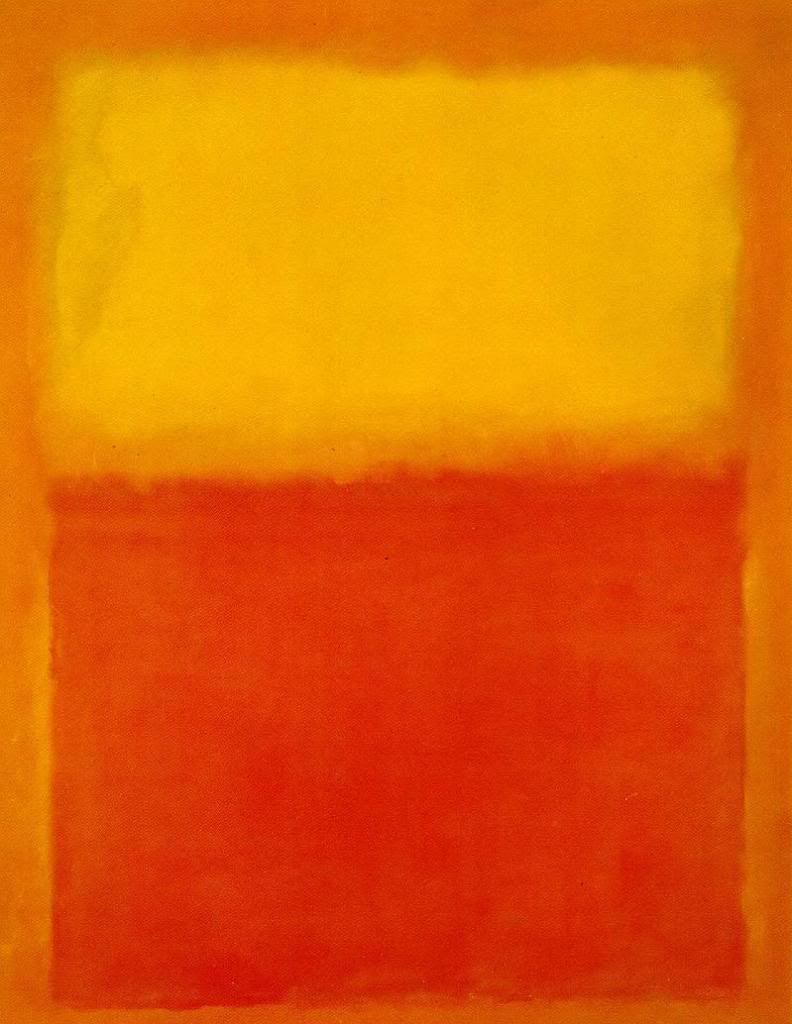
(Painting by Mark Rothko "Orange and yellow" 1956)

Why Did the Chicken Cross the Road?

Wednesday, August 1, 2012 | |

Why did the chicken cross the road?

Let us ponder this question for a moment. Many argue the question is too careless and gives too large a room for responses inherently indubitable, but I believe I can find a solution by further developing the question then circumstancing my personal reflections. Despite the satirical nature of the question, I'll derive a conclusion, however exclusively subjective. I'll attempt to push the question as far as possible. With each iterative addition of condition argued in regard to the initial question, I'll provide an answer to its current state and another scenario purported by following additional conditions. And when all possible variables have been annotated, I'll inductively reason to uphold an answer and conclude with a final remark. Then, I'll add a personal insight to my conclusion.

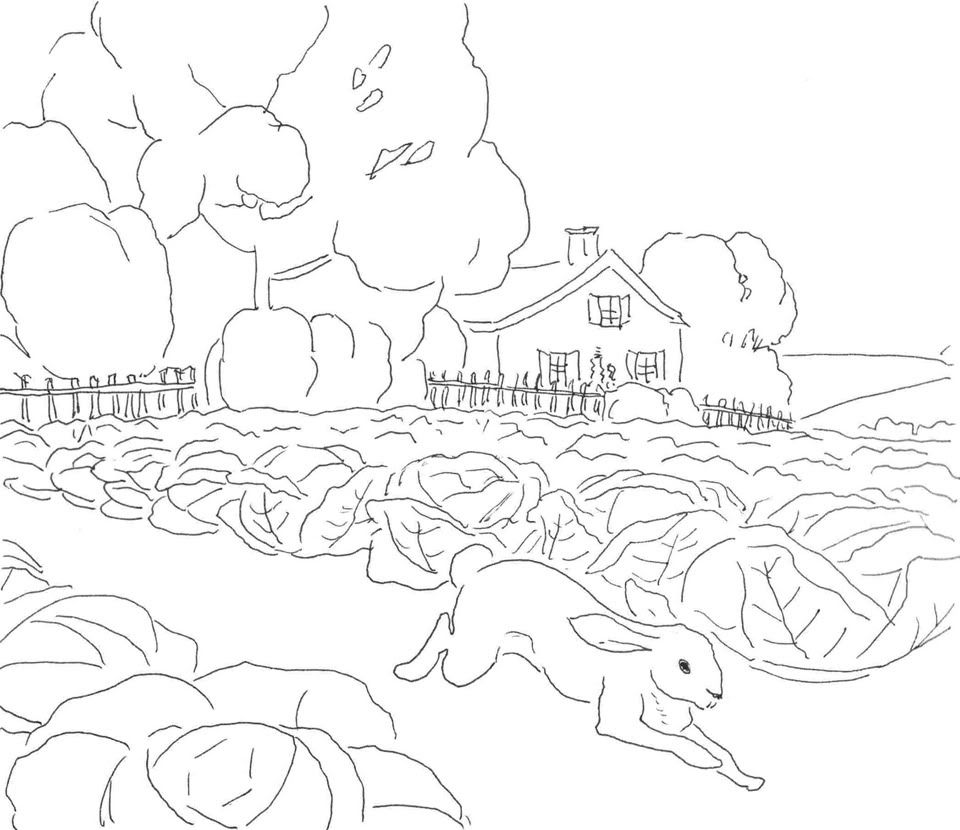
So, why did the chicken cross the road? Let's, for the rest of this exercise, disregard all existential doubts. The chicken indeed crossed the road. This remains a fact and for those inclined to doubt any evidence at this point let's note that at point-x and time-y the chicken began to cross the road. Hence, any responses that deter from this observation will be treated as false. Similarly, the essence of the chicken is subdued by the exact cursor. The essence of the chicken is defined as the common domesticated bird which lays eggs and its meat processed as poultry. Responses which counters denouncing its existence, such as 'What chicken?' or 'It was really a rabbit', will be dubbed inadequate and premature. Same logic applies to the definition of road and its validity as a road.

Another pretense the question holds ambiguous is whether the chicken was genuinely the victim of its intentions. To phrase otherwise, was the chicken passive or active in its decision to cross the road? The question is elusive in this regard. However, the question hints clues. Considering its semantics and grammar, the chicken is the subject and the road is the object. It does not refer to the road being crossed by the chicken. Additionally, I argue that it's more probable that the chicken actively crossed the road and it was not unaware of its actions. Therefore, the chicken was intentional and its actions were ascertained deliberately. In the likelihood it was not intentional, I logically assume that the chicken was not cognizant. Given this condition, 'The chicken was sleep-walking' or 'The chicken was blind and deaf' will suffice as a response. However, this argument is defeasible. It introduces a new variable in the question that defers the subject of the question away from the chicken itself by displacing its authority in intention elsewhere. And along with it comes a twist but only posterior to the prior information. Thereby, it artifices a conclusion. I comment it as an ill-witted response to an impostor of a question that'd derail both the trickster and its audience altogether.

This leaves a final pretense which must be addressed. That is, what were its environmental conditions? And the most concise response is that there was nothing else present besides the chicken and the road, the question's initial givens. In the same manner as the chicken's internal state has been clarified, its external states can be clarified also. In the likelihood the chicken was not alone or there were other environmental variables present, the argument is defeasible due to an unlikely, convenient prior information only unveiled posteriorly. Though not perfectly certain, these are the logical presumptions I make when I attempt to answer the question: why did the chicken cross the road? And only when the conclusion derived from the alternative, or the question's givens, proves fallible will I revisit the assumptions made thus far.

So then, what are the givens? The givens are two things. The chicken and the road. From here on, we can deduce several other facts. First and the most obvious, a road is divisive by definition. While it functions to form a path which traveling can be accompanied through, it also entails separation of two sides. The chicken is on one side and there is the other side. Second, the question is not interested in whether the chicken successfully crossed the road or not. As mentioned previously, the question is primarily concerned with the intention of the chicken. Hence, the proper response to a question of 'why' would gender a statement starting with 'because' or 'to' followed by a verb.

I've hinted the answer. From here on, you can begin to formulate the possible answers. But a response which begins with 'because' does not work. 'The chicken crossed the road because' instigates the internal intentions which still remains unforeseen by the readers. Hence, this deduces the choice of answer down to one. 'The chicken crossed the road to' - to do what? And here we find the answer in plain sight. It's inherent in the word 'cross'. Cross is defined as to move, pass, or extend from one side to the other side. Hence, the chicken crossed the road to get to the other side.

So, yet again I ask. Why did the chicken cross the road?

The answer is this: to get to the other side.

This answer may seem anti-climatic to most. It may be less of an answer expected, but less is more. There's a twist. And this is the cunning, dual nature of the question and the answer together. While answering in the most obvious means possible, the other side is a reference. We assume, because the chicken and the road are physical manifestations, the question relies on answers that are both material and existential in nature. However, we bypass the notion that it need not necessarily be true. And that the response may as well be metaphysical and metaphorical. In here, 'the other side' is an allegory. The other side of life. Death. Beyond life. The chicken did not merely cross the road to set its feet on the other side but to experience death.

We find multiplicative answers in a single line of response. The chicken crossed the road to get to the other side. Inclusively defined as to die.

Rest in peace, dear chicken.

Image sourced from Mizz via Google

The Velveteen Rabbit

Wednesday, August 17, 2011 | |

What is real?

Back then, I've understood loneliness to be just another part of life. An impossible acquaintance to rid. Yet, it was perfectly benign. Once you've mapped out the boundaries of loneliness it had began to feel more like a chore than an emotion. Just another variable in life that I needed to deal with. Of course, appearances can be deceiving. Loneliness wasn't benign. It carried a heavy price; you'd have to suffer not feeling anything at all. Outside, life continued on but I wouldn't respond. I had forgotten how.

Post-modernism.

I used to believe that it didn't matter how horrible I treated someone. It would be justified if I treated myself worse. If I upheld certain values and expected people to live by them, it would be all okay as long as I accounted myself by even more stringent values. The saying, 'do unto others as you would have them do unto you', was still in effect. If I got angry with someone because she had disappointed me, the anger would be justified because I've gotten even more upset with myself when the same mistake was made by me. It was all relative. Hence, right or wrong only existed in contextual, perspective-dependent basis. It was merely a perception.

Time passed and I realized that not everyone was so thick-skinned like me. People got hurt. But I only took pity. Life is tough and I had shown them a piece of it. I wasn't sorry. They didn't understand it. It was their fault! I believed tears were a sign of weakness. And I wouldn't ask for help, ever. Dependence was admitting defeat. I would continue this phase for years, distancing myself more and more from people. And slowly I found myself alone. But I'd continue, until I couldn't feel anything. Life had become a clockwork. There was no pulse, only ticks.

Love.

The numbness persisted. It was a while before I felt the pain. I couldn't go on like that anymore. It wasn't humane; all reality had been sealed off and by lack of, I was suffocating. The pain, which felt like a dryness I could not quench, would grow more and more. Then came the hunger. I was hungry for something real. I wouldn't care what it was, as long as it was real and genuine. Yet, I'd still try to ignore the pain. But then something happened. I saw something, or what was about to come. I saw darkness brewing and the malevolent bane it had conceived. Eventually, it would swallow me whole. I got scared. I started to crumble down the very walls I've built around me. I'd turn back and open myself up again, slowly. Eventually, reality started to sink back in and I was adjusting again.

I had started reading more. I frequented morning and afternoon teas. I was playing the guitar again. Writing, photography, design, music, and architecture seemed fun. What seemed like strenuous endeavors before became enjoyable. The subway rides to school became a lot less mundane, silence became a lot less uncomfortable. Flowers seemed brighter, air crisper, conversations were more intriguing, and the city became more interesting. Food had become more palatable and I'd go out more with my friends, meet new people and see new things. Requisites for love and life had taken toll and unbeknownst to me then, months after, in the following spring, I would fall in love.

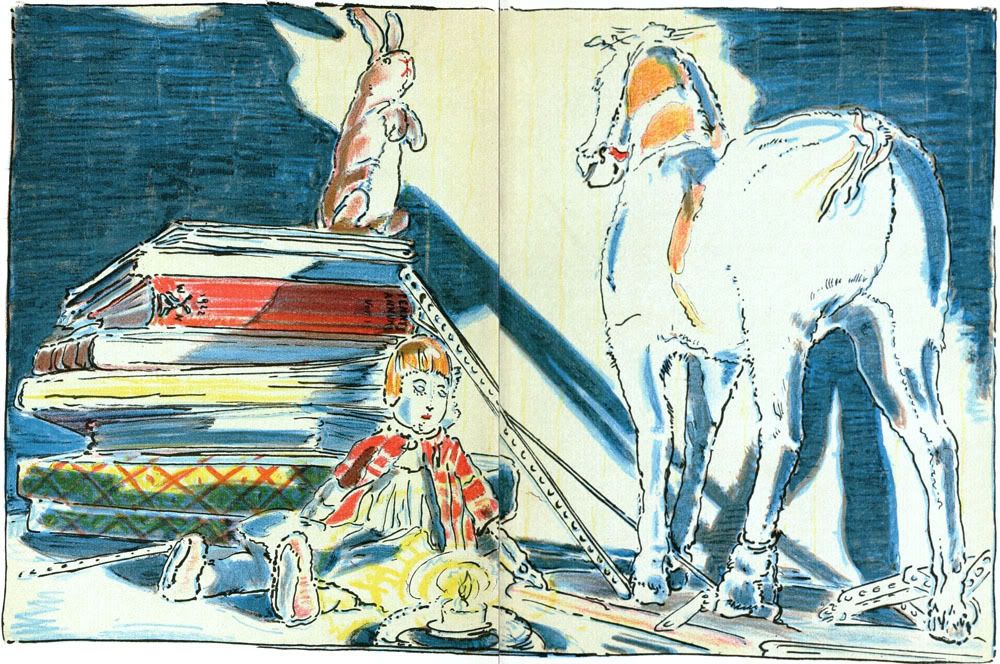
"What is real?" asked the Rabbit one day, when they were lying side by side near the nursery fender, before Nana came to tidy the room. "Does it mean having things that buzz inside you and a stick-out handle?"

"Real isn't how you are made," said the Skin Horse. "It's a thing that happens to you. When a child loves you for a long, long time, not just to play with, but really loves you, then you become real."

"Does it hurt?" asked the Rabbit.

"Sometimes," said the Skin Horse, for he was always truthful. "When you are real you don't mind being hurt."

"Does it happen all at once, like being wound up," he asked, "or bit by bit?"

"It doesn't happen all at once," said the Skin Horse. "You become. It takes a long time. That's why it doesn't happen often to people who break easily, or have sharp edges, or who have to be carefully kept. Generally, by the time you are real, most of your hair has been loved off, and your eyes drop out and you get loose in the joints and very shabby. But these things don't matter at all, because once you are real you can't be ugly, except to people who don't understand."


Excerpt from The Velveteen Rabbit by Margery Williams

National Museum of Korea

Sunday, July 3, 2011 | |

I'm not big on old stuff, like antiques. That's what my mom's interested in. Not me. I don't have the patience to stand and read all those historical events and background information that are written on the plaques beside the artifacts. When it comes to fine arts, I'm like a kid with ADD. I need to take-in and feel it right away. You know, like modern and contemporary art. They need to be visually refreshing and conceptually novel. Old ceramics, archeological artifacts, yellowed-out maps, engraved stone tabloids, ancient jewelries, and clothes-that-haven't-been-washed-over-two-centuries rely on subtle contextual differences and small details which I tend to overlook. So it's surprising that I decided to visit a historical museum and the biggest one at that, the National Museum of Korea. Well, afterthoughts? Personally, it made a good lesson for cultivating my patience. But for those who actually enjoy historical museums, I'd say go if you get the chance. The museum's also huge, so if you're on a diet and looking to ambulate I'd say this makes for a good afternoon session.

In all seriousness, the museum experience was great. Admission is free, the National Museum of Korea holds the biggest Korean-Asian heritage and artifact collections in Korea, it has solid interior designs, there are some nice cafes to rest, and the people who work at the museum really do care. I saw a couple of security guards just zoning out of their duty and gazing at a piece. And few discussing amongst themselves. I always find that kind of interest and sincerity to be an encouragement for the visitors, like myself.


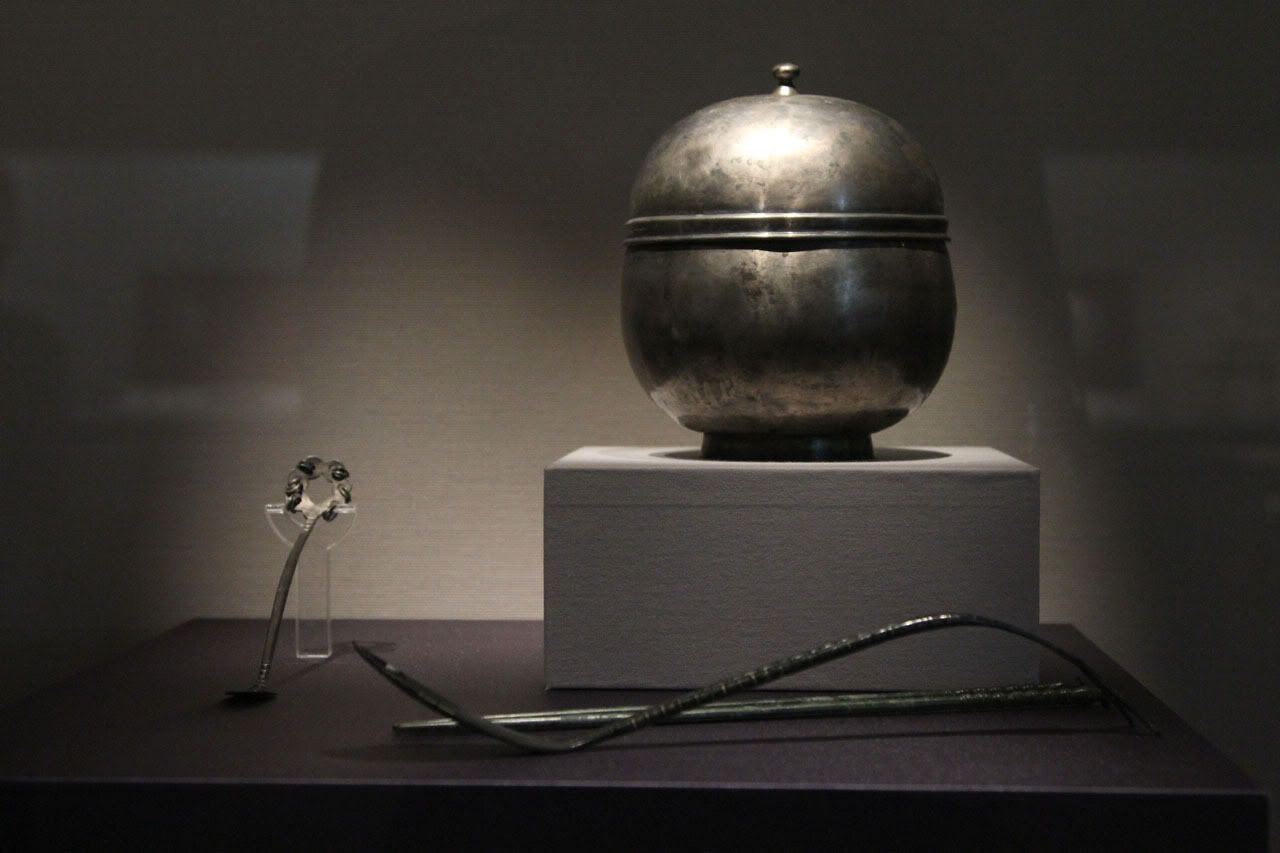
The pictures aren't in any particular order. For higher resolution slideshow, click here.

Old Candies

Friday, April 8, 2011 | |

Spread by James Turrell (2003)I don't know why you're smiling. With a grin so devious and your eyes so senile, you know you're about to collapse. You've been so focused on building this and that. What an empire you've created, of dust. And dust you will become, too, eventually. The hourglass stands strong, so you say. But so did all the souls who have come before you. And I ask, where could you possibly be going? There is nothing beyond. Your legs exhibit the pride of a warrior, or so you claim. But you've deliberately shadowed it. You're ashamed of them. The very feet you fault for having outpaced all the people around you. So long. The bridges you've crossed and the hands that you shook have been severed. You speak of confidence. All I see is arrogance, besieged against your weakness.

Listen to my words while you still can, for it might be just another mile or two before you'll even lose me. I'm a friend. You might disagree, but I'm trying to help you. Stop and reflect. I don't know what you believe but it doesn't make sense you ought to be doing what you are doing. Especially alone. You insist though. That will become your end-all. Hubris, that is. You deny, but even if your denial were true sooner or later you will become the captive of your soul because of it. I know it. But I suppose there's no point arguing with you. Such ill-witted large wall you have around you. Strong you may be. Yet you're tired and thirsty. Come back awhile and I'll throw a new linen on your bed. Flocculent, just as you like it. It's the least I can do. You can see there's no harm in that. Yet still, you insist you move forward. Into a void.

Have some of those candies at least. The ones in your pocket. You are weak; those ought to give you extra mileage. They look awfully delicious, too. The journey is tedious already, you could savor those up. You've earned it. Plus, eating them ought to lighten up your burdens too. You don't need to carry them with you forever. Candies are cheap; they shouldn't be valuable anyway. Your life is more valuable, am I wrong? Just eat them. Eat them already! This is the last advice I'll give to you!

Who cares if they're old?! Candies don't expire. I don't understand this! You'd rather risk dying than eat those candies and give yourself a better chance ahead. What could be so valuable about those candies?! They're just damn candies! Would you rather die than eat them?! Are they that important?! Are they worth your life?! Are they worth dying for?!

Yes.

Spread by James Turrell.

Be Every Color That You Are

Sunday, March 13, 2011 | |

There lives inside each of us a small sphere of colors, containing within it an intangible, exuberant force of life. Each one is unique, and each one is beautiful. It breathes, it moves, it speaks, and it's constantly evolving. It's the spirit we carry with us and from time to time we speak of its aura. We can feel it as our heart beats, as we breathe, as we walk, talk, eat, and drink. But more often than not, we are unaware of it. Its presence seems to come and go, and when we try to grasp it, it slips away. But it's there. The sphere of colors, or whatever you may call it, are the essence that captures our beings. It's what we often refer to when we call each other by our names. It's ultimately what makes you, you. But what is it that makes it so hard to realize who we are? Why is it that nobody can just tell us who we are and be fine with it? What is it that makes us ask the question, "Who am I?". Why do we burden us with questions after questions, in quest to seek ourselves? Is it true that we're in a constant struggle to find ourselves in this life, battling to find out our true selves? If yes, what is it that we're fighting? Could it be the world? The people? The devil? The temptations? Or is it ultimately, you are fighting yourself? I don't know. But we're faced with constant struggles, dilemmas that must be resolved. And at any given time, the adversary can be the common sense, a person, moral justice, temptations, personal beliefs, yourself, or more. But the question still holds. Why do we burden us with questions after questions? What is in for us at the end of this quest? Do we have a destination in our mind? Or is there a destination to begin with? Again, I don't know.

E. E. Cummings
To be nobody but yourself in a world which is doing its best, night and day, to make you everybody else means to fight the hardest battle which any human being can fight; and never stop fighting.

Leeum, Samsung Museum of Art

Saturday, January 15, 2011 | |

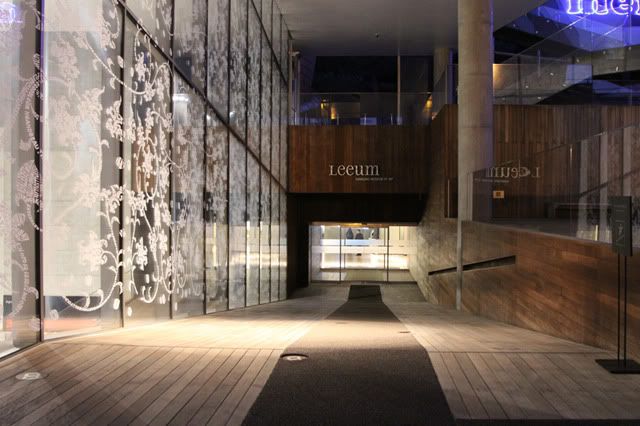
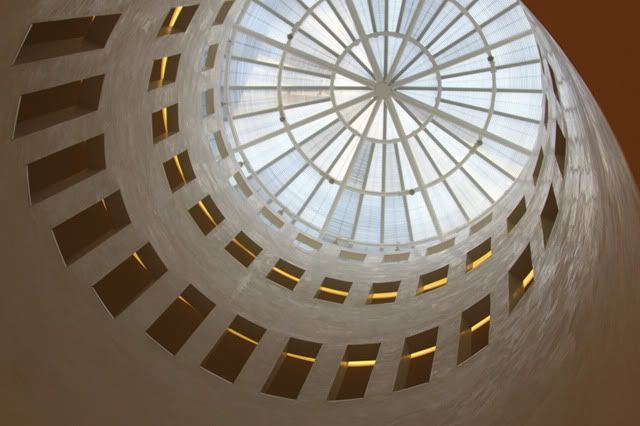
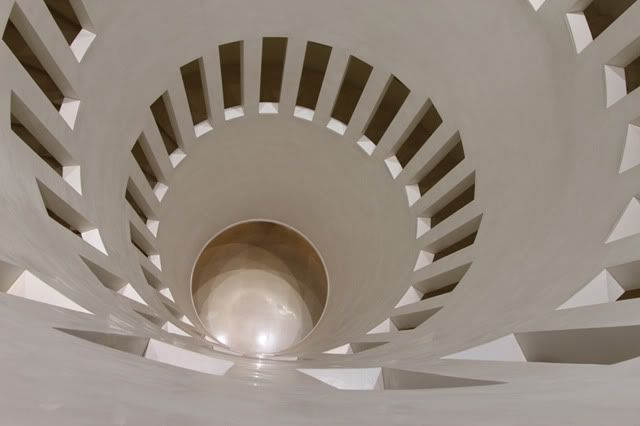
This is the entrance to Leeum, the Samsung Museum of Art, designed by starchitects Mario Botta, Jean Nouvel, and Rem Koolhaas. The museum houses 2 separate museums with its own respective tickets at visitors' choice. These make up 2 of the 3 sections of Leeum. The third is the children's education center designed by Koolhaas. The name can be misleading though; while there are some things related to children and education, majority of them are installation works and among them, ironic enough, mature content as well. The ramp leads you down and invites you onto its foyer, the connecting joint between the 3 sections of the buildings. And as you continue onto the ticket booth, at the center of the foyer you'll notice the shower of light that enters through the rotunda staircase Botta designed, roofed with a skylight.

The staircase actually seems more sacred than secular. The light, the Euclidean geometries, virgin white, and seemingly loftiness of the heavy walls resting on 4 pillars. Suiting, Botta's section houses the ancient relic of Korean ceramics and celadon artifacts. Priceless pieces, many of them from royal lineage that were viewed only 1-step shy from the work of heavens' craftmen themselves. I enjoyed looking through each nook and corner. Leeum was my first encounter with Botta's works. I've seen Botta's works through many books and pictures and I've imagined something much more grandiose and upscale. But the staircase itself is fairly narrow and intimate as the walls close in more and more as you descend. The window slits are fairly big but more important than its size is its vertical orientation that seem to emphasize and signify the light from above.

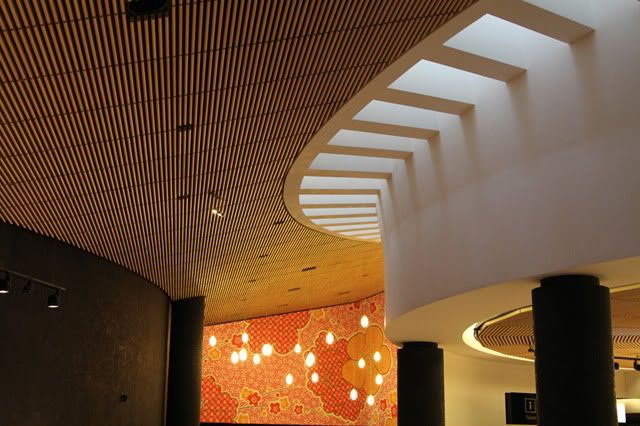
The details Botta has put onto this building amazed me. Out of 3 sections by 3 respective architects, I was impressed by Botta the most. I could definitely see Alvar Aalto's influence on Botta. From the wooden paneled ceilings to detailed handrails, his choice of mix in red bricks along with variety of materials, white interiors, and functional spatial organization, I found myself thinking that despite the apparent unique persona of Botta's in his works Aalto must've had a deep impression on Botta.

To be honest, I confess that I know nothing about architecture. My architectural knowledge only goes far as few survey courses and my photography experience at best. And to tell you the truth, I really didn't get Nouvel's section. It made no sense to me. 3 floors of matte black interiors with glass curtains mostly at its basement level with a view of an exterior stone facade that distances from the glass at best 3 meters. On the other hand, Koolhaas's was very intuitive, though I know he could've done a lot better. But Leeum as a whole museum complex, I have hard time grasping just exactly what is going on. There seems to be something very robust. There's a tension and subtlety in dialogue. But whether that's because the 3 are in direct conflict of one another or because it's due to an effect of a new-found compromise and uniformity, I don't know. But I do plan on revisiting when their deck opens so I can get a better view. But moving away from my limited knowledge of architecture, I did enjoy the art collections Leeum had to offer. Personally, it seemed a bit too eclectic but each piece on its own was masterful, to say the least.

This Must Be the Place

Saturday, January 1, 2011 | |

The artist Chong Gon Byun explitly describes his idea of home as an island, a safehouse to ward off others, and a place where one can retain control of his life. Somewhat conventional of an answer but true at hearth. It's a simple question, really. "What is your idea of home?" But in actuality, if someone were to ask me where my home was and how I defined home, I'd probably just try to laugh myself out of the situation, an attempt to evade the question. But if someone were to ask me where I was from and what it's like where I'm from, I'd try to narrate everything I knew about Toronto down into 5 lines. Or if someone asked where I lived, the answer would be much more rhetorical than empathetic. Seoul. I live in Seoul. But suppose that hypothetically I didn't like Seoul and I was reluctant to say that I lived in Seoul for whatever reason. Does that mean I don't consider Seoul as my home? The assumption here would be that home is a place that you connect emotionally, more specifically through positive emotions such as belongingness, comfort, and warmth. But I don't think it's that discrete, because places can grow on you even if you disliked it initially. So then hypothetically I've come to terms with Seoul and now I don't mind calling Seoul my home. Was choice involved? I mean, by merely considering a place as home and then choosing to declare a place as my home by living in it, has the definition of home been reduced to just a choice, and only a choice at that? To reverse the conjecture, would it be strange for someone to have lived at one place his whole life without ever feeling that was his home? I think it would be strange but not impossible. I'd think that for you to feel at home, you'd need to appreciate it first. And not in a way that makes you feel exclusive and special, but kind of more like how a kid might see another kid with the same teddy bear but still takes care, loves, and calls his teddy bear for his own. Ubiquitous, in a sense. Paradoxically, I think you'd need to accept your surroundings before you can accept your room or apartment as your home. An openness to venture and appreciate your local environment for gratitude towards your shelter and closed-ness, perhaps.

So what is your idea of home? To be honest, I wouldn't know how to answer that question. To borrow Heidegger's words, I'd say that the idea of home is an effect of dwelling, or simply one of the modes of humans being, the act of existing. And dwelling is simply a mere goal as to building. In that sense, the physical edifice of a home is not so much important as the one for our mind and soul. That is, the implications of which, if home is the effect of our being then the meanings and the gravity of its essence are implied through our actions. Simply put, the more we enrich our relationship with our surroundings the more consequential our dwelling and our ideas of home will become. But still that's too simple of an answer and in half truth I would've implicitly recited this answer beforehand to have evaded the question to begin with. That is, if you asked me the question and my initial evasive laughter didn't work on you.

But in all likelihood you didn't ask me the question, happy new year!

Like Luminol

Saturday, December 18, 2010 | |

Seoul may wield a soul boring as a plain bowl, but it'll maul your galls if you don't curtain your stronghold walls. Make you small, let you fall. As vandals, it'll stun and appall. Sprawl voodoo dolls along with its squalls. Steadfast, if you're not, its soft snow balls will avalanche and tide your end-alls. I knew a friend from Montreal whose spirit has been hauled. Now it lies to crawl among the thousands around the city hall. Drawl not, for you will surely befall your diffidence under masquerades of cabals and seductions of sirens' calls. Bawl you may but should not, because for all things banal and abysmal, hope exists somewhere antipodal. Lest you forget, fixate on the compass on your gimbal, and ride not words venal. Install your all, mark your halls on matters that ignite your soul like alkaline on luminol.

'White on White' painting by Kazimir Malevich. 1918, Museum of Modern Art.

SNU Fine Arts & Design Degree Show (Part 2)

Saturday, December 11, 2010 | |

This time around I got to visit the design department exhibition mostly. And again, I really enjoyed it. I thought it was really good, massive in size and the number of pieces; there were ample of exceptional skills, tons of underdeveloped conceptions though many prime in nature, and thoughtful. All in all, very gnarly. The only thing I wish the exhibition had more was the design processes. The final pieces are all practical, neat, and cool, but it hardly tells any story of how the author brought about his or her ideas from its conception to the final product. The methodology and designers' thought processes were largely absent.


Here's a link to a higher resolution slideshow. Ciao!

SNU Fine Arts & Design Degree Show (Part 1)

Sunday, December 5, 2010 | |

The Seoul National University's Colleges of Fine Arts and Design are currently exhibiting students' work throughout the Fine Arts buildings, building 220, and the SNU Museum of Arts. I took the liberty of going out on a stroll with a camera since the College of Fine Arts is directly adjacent to my lab building. And to my bewilderment, the exhibition is huge! And the amount of talent and the level of executions are stunning. Majority of the pieces are somber in nature but variety of expressions nonetheless. Some pieces were original while others weren't. But I especially thought they did a fantastic job of curating and managing spatial organization. Here are some photos, but I assure you these photos don't do this exhibition justice one bit!


Click here for higher quality slideshow!

Sticky Monsters Lab

Saturday, November 20, 2010 | |


A friend at my lab introduced me to Sticky Monsters Lab, a design studio based in Seoul which specializes in motion graphics. This particular video features music by The Black Skirts, a Korean indie-slash-punk band. The content of the story in the video may be grim, but it has such a quirky storytelling style. The studio itself had some major projects in the past and good publicity, including few Nike and CJ commercials. You can all browse them through their Vimeo site.

Something Something Grand

Friday, October 15, 2010 | |


I've been trying to write a post for the last few days. I've been trying to get back on the habit of blogging again. But after drafts and drafts, I can't seem to write something that I actually like. I have ideas. But it seems like there's a disconnection from myself and my thoughts. I seem to have the time, but somehow, my patience has waned. And listening, even to my own voice, seems a lot harder. There are waves of noise and the noise seems incredibly loud. I have hard time focusing. Even the usual mental exercises don't seem to help. If I could only picture myself writing, it seems like I'd be able to write again. And through writing, I'd be able to unpack my mind. Settle it and calm it a little. Despite the unusual circumstances that have happened last several months, I wish my mind could embrace this place as its home and take refuge. Stop running and rest.

I stood on the balcony of my dorm for a while and just stared at the evening skyline. I could see glimmers of thousand buildings lit across and the mountainscapes showered by artificial light. For a while, nothing entered my mind. Maybe the thought of cigarettes and smoking entered my mind, thinking that my hands wouldn't feel so awkward then. But after a moment of wait, there was a light tug, and a question entered my mind. When was the last time I've ever just sit or stood still, in silence, and alone? It seemed like it was all a long time ago. And instantly, I started paging through the last few days and the last few months, racing through my memory. But then my mind halted. I was doing it again; I seemed to have even lost the ability to be still. It's all the noise and the distractions. And for a moment, I wished I was back in the passenger seat of my brother's Toyota Camry. Driving down the driving the vast Canadian highway at midnight with nothing but the sounds of the tires rolling and the tall street lights flashing by, one by one. He'd be driving and I'd be on the passenger seat, quietly staring out the window. And I'd close my eyes just enough, and all the lights would've seemed to diffuse and form bands of different colors, like a stream of light. And with each light passing by, it would seem as if you could draw the very pulse of the heart by your eyes.

As my personal anecdote often states, everything always comes down to faith. In this case, it seems like I can't even convince myself when I'm writing. I'm at disbelief at my own writing. It's a strange feeling, knowing that you're a little disconnected from yourself somehow. It is a little disheartening. Yet, I take slight joy from the truth that the disconnection I feel doesn't necessary mean, or engender, a state of conflict. And really, like the pulse, it's just a phase. I just have to restart bit by bit; start small.

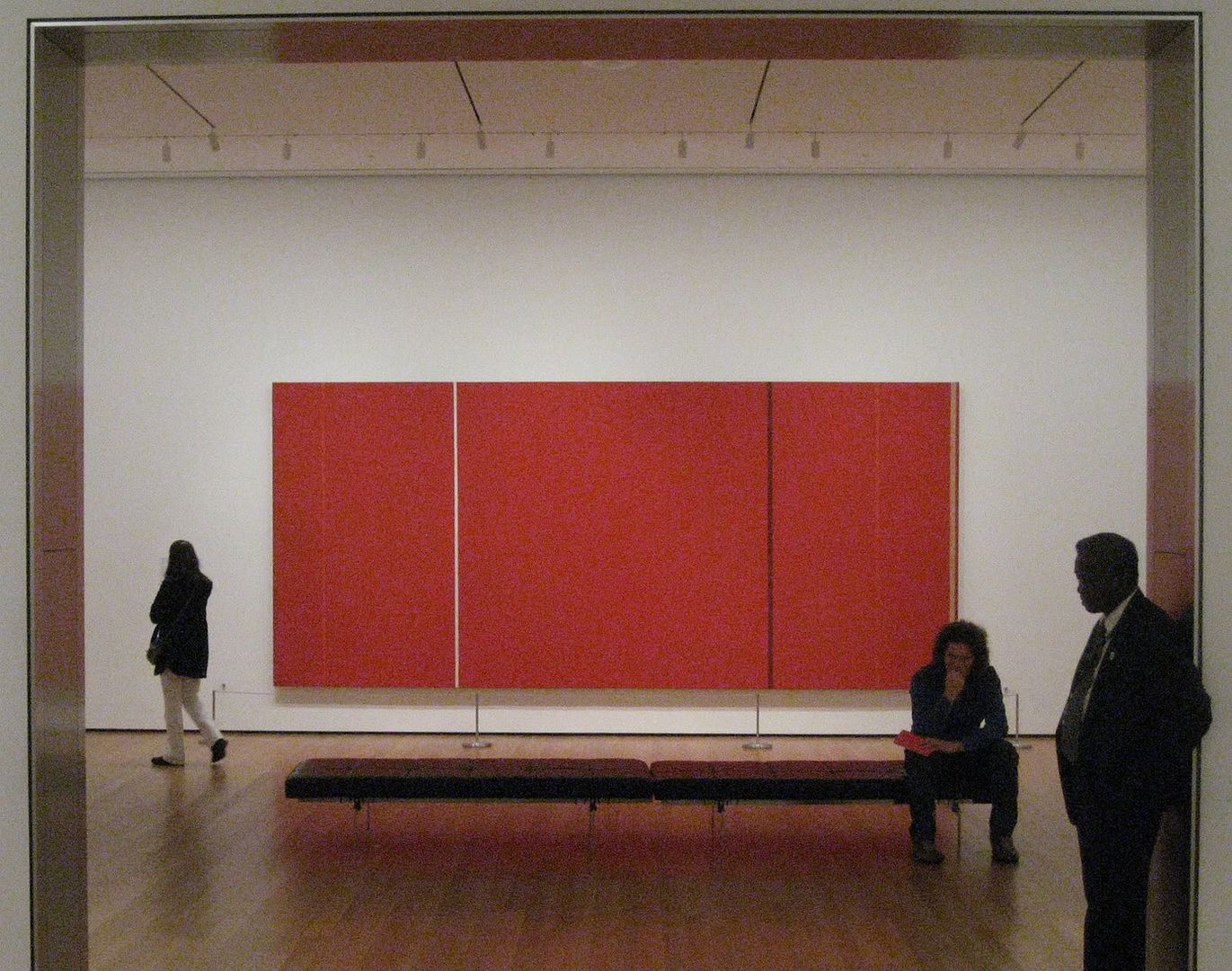
Photo of Barnett Newman's 'Vir Heroicus Sublimis' at MoMA by David & Heather

On Affinity

Friday, May 21, 2010 | |

...the temples and the subsidiary buildings of their sanctuaries were so formed in themselves and so placed in relation to the landscape and to each other as to enhance, develop, complement, and sometimes even to contradict, the basic meaning that was felt in the land. From this it follows that the temples and other buildings are only one part of what may be called the 'architecture' of any given site, and the temple itself developed its strict general form as the one best suited to acting in that kind of relationship.

Vincent Scully (The Earth, the Temple, and the Gods, 1962, p.3)

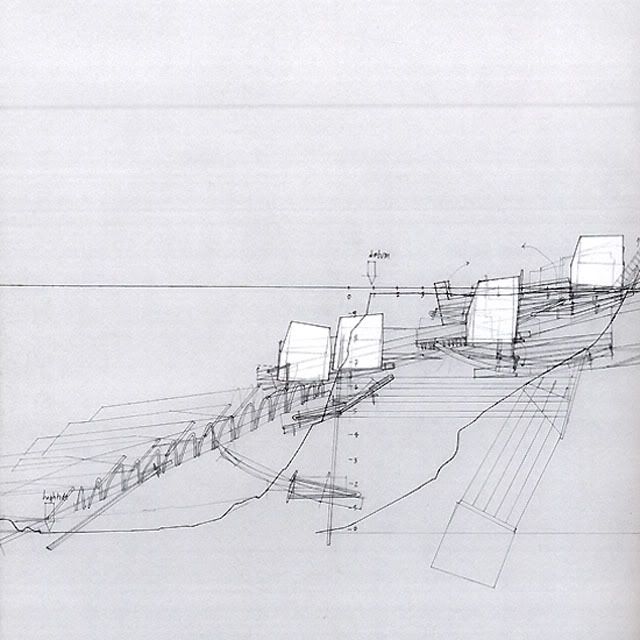
Smout Allen's plan for the Retreating Village

The Story of Polo the Rabbit

Wednesday, December 9, 2009 | |


Once upon a time there lived a rabbit whose name was Polo. He had brown eyes, snow-white fur and a pair of long elegant ears. Did I mention he had a cute butt? He looked like any other rabbit and if you were to pick him out of the crowd, it would've been just as hard to spot another rabbit. He was ordinary-looking, or maybe a tad more handsome than other rabbits? He went about his days like eating carrots, running races, and going to school like any other rabbit. But the similarity stops there.

You see, he had no friends. He was a bizarre one. He was, to say the least, different. Growing up he didn't get along with other rabbits. To be fair, Polo was nice and he was always eager to help those in need. It's just that no one really understood him. When other rabbits were going to school, he'd skip classes to take a walk, watch the clouds, or study the rivers. He was a curious soul and he was genuinely innocent to the point of being fearless. He didn't care much for toys, the race and the rankings, or even grooming or rabbit beauty products. It would be safe to say that Polo was more in tune with Mother Nature than the rabbits, or his kind.

Polo was also particular in that he liked to talk to the insects such as the bees, the butterflies, or the centipedes. Mind you, the rabbits were an awfully proud race. They ruled over all the other animals in their village including the squirrels, the turtles, and the mice. The rabbits were in charge of rationing the food, setting up regulations, and other social works that concerned basic animal rights. But Polo wasn't like any other rabbits. He befriended the insects just as much as he befriended his fellow rabbits, or any other animals. And because of that, he was often made fun of and he slowly became an outcast.

It was one rainy spring but with lots of sun. The crops grew and grew. They towered over the rabbit village and all the rabbits marveled at their harvest. Among the crops were the carrots, the rabbits' only food. They saw how much carrots they had and they rejoiced. They harvested in joy. They quickly piled up and rationed among the rabbit families. They left none for any other animals. The first night, all the rabbits gathered up and had a feast. They played, ate, ate, and ate. The second night, they had another feast. The third, the fourth, the fifth.. This continued until there were no more carrots left. Yet, it was only the middle of summer. Such foolish rabbits! How could they eat all those carrots before the season is up? So they were forced to go back out in the fields and this time, they harvested the leaves as well as the roots. And by the end of fall, most of the roots in the field were gone. They were quickly depleting and at this rate the rabbits would've exhausted all their resources. Polo became concerned. He told the elder rabbits about the problem, but they were too stubborn and would not listen.

Polo, being a rabbit, could not travel too far because he knew beyond the village and the hills, there were foxes and wild-dogs. So he pleaded the Queen Bee to help him locate a plot of land that he could use to farm. And in return, he would help the bee colonies detect bears with his long years and take shifts on watch. So the Queen Bee found him a hearty acre of land to farm his carrots. Polo gathered up all the carrots he had and planted them. He also started saving up little of the carrots he received and farmed them as well. Polo quickly became exhausted but he continued night after day.

I wish I could tell you that the next spring Polo became a savior and all the rabbits loved him. But such a fairytale-like story belongs in fairytale books.

Before Polo could tell the rabbits about the plot of land where the carrots grew, other rabbits already informed the elders. The credits went onto someone else. And Polo grew weary. He was growing tired of this world and the foolish rabbit ways. He wished he could travel and explore the world beyond the hills, but he also knew that his deeds weren't without purpose. He was helping hundreds of the rabbits stay alive.

Polo the farmer rabbit continued this deed years after years. Polo lived till 9 years, which is a long stretch in rabbit years, but until his last breath he continued to farm without recognition. He did what he did because he believed in his deeds. He loved the rabbits nevertheless and continued to enjoy his life among other animals and insects. As his relationship with the bees deepened, he had the honors of chatting with the Queen Bee which no other rabbit had ever done before. He continued to help the bees out on their bear-watch. He also befriended lots of other insects such as the centipedes, the spiders, and even the fish. But among all the animals, Polo had a true friend that he always talked to. And that's the willow tree at the top of the hill. And it's the same willow tree that housed Queen Bee's hives and colonies. Polo loved to come under the shade of the tree and just share a chat or his dreams with the tree. Sometimes he would come to seek counsel and the tree would give him advice. Polo was a good rabbit. Although not a properly accredited hero, Polo was a hero in his own right. And I'd say there was a sense of joy in Polo's life as well. Actually, I'd say his life was richer and more blessed than any other rabbits I've ever known. And believe me when I say that Polo truly lived his life to the fullest.

Goodbye Polo. We'll all miss you.

8 Ways to Kill an Idea

Sunday, November 22, 2009 | |


Illustration by Scott Campbell via samiviitamaki.com

The EyeWriter

Sunday, November 15, 2009 | |


Members of Free Art and Technology (FAT), OpenFrameworks, the Graffiti Research Lab, and The Ebeling Group communities have teamed-up with a legendary LA graffiti writer, publisher and activist, named Tony Quan, aka TEMPTONE. Tony was diagnosed with ALS in 2003, a disease which has left him almost completely physically paralyzed… except for his eyes. This international team is working together to create a low-cost, open source eye-tracking system that will allow ALS patients to draw using just their eyes. The long-term goal is to create a professional/social network of software developers, hardware hackers, urban projection artists and ALS patients from around the world who are using local materials and open source research to creatively connect and make eye art.

Tony Quan (aka Tempt One)
Art is a tool of empowerment and social change, and I consider myself blessed to be able to create and use my work to promote health reform, bring awareness about ALS and help others.

All credits go to eyewriter.org

Lichtfaktor

Saturday, October 3, 2009 | |


Videos! Videos! Click on the pictures. They are all videos from Lichtfaktor's flickr photostream.

Lightfaktor is a Germany-based group of graffiti artists who express themselves using light as their medium. By taking advantage of the digital age, they use cameras and computers, taking long exposure shots of duration from just few seconds to 30 seconds, and even up to a whole minute. And between those few seconds, using any sort of light such as flashlight, LED, flourescent, they creatively 'draw' on air as their canvas, as if leaving an invisible imprint that can only later be seen through the camera.

You can check out the official site at lightfaktor.eu, and make sure to check out the video section!